
Writing an EDA tool is one problem. Getting an engineer to trust its result is a different one, and it is the harder of the two. This is about the second problem, which is the one a young tool actually faces.
What we do not have
The established tools carry something we cannot buy or write. Over decades they have run across thousands of customer designs, in styles their authors never anticipated, on process nodes and corner cases and bugs that only appear at scale. Every one of those runs left something behind: a case that now gets checked, a failure that now has a test. That accumulated exposure is most of what makes a mature tool mature. A tool written this year has none of it. Ours does not either. Pretending otherwise would be the fastest way to lose an experienced engineer, because the first thing they will do is give it a design that breaks it.
Why easy examples are not enough
A tool that passes a handful of clean examples has proven very little. Clean designs exercise the parts that were easy to get right. The value of a verification tool shows up on the designs that are awkward: unusual clocking, deep hierarchy, wide datapaths, protocols with edge cases, memory that does not lay out neatly, code that is technically legal and rarely written. If a tool only ever sees pleasant inputs, it stays confident about things it has never actually been tested on.
So we build the hard designs ourselves
Since we do not have twenty years of other people's designs, we build the pressure ourselves. Processors and SoCs of our own: chiplet systems, an ADAS SoC, an Ultra Ethernet NIC, a high frequency trading design, mobile SoCs, along with IP, VIP, and designs that are deliberately difficult, some of them deliberately broken. We run them through simulation, formal, clock and reset domain checking, coverage and the rest, and we look for the places the tool is wrong, slow, or too sure of itself. The point of building our own designs is not a catalog. It is to manufacture the kind of exposure a mature tool got for free over decades, and to get it in a much shorter time.
Regression is the memory
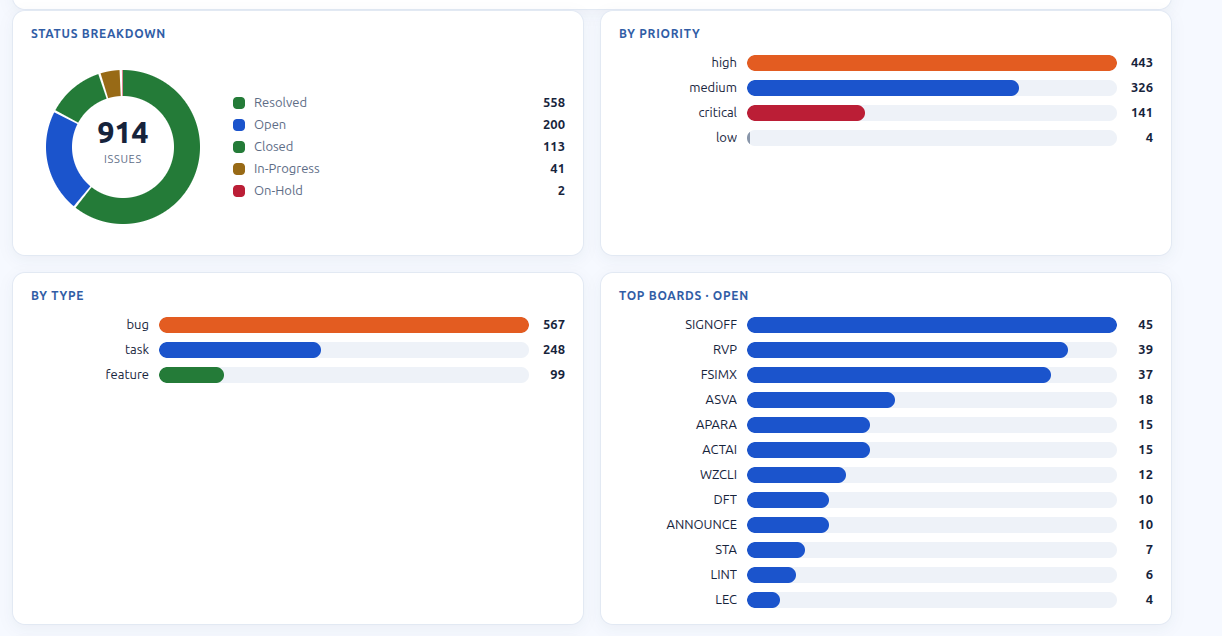
A failure that is found once and fixed is worth very little on its own. What matters is that it never comes back quietly. So every genuine failure, ours or a user's, becomes a test that should not fail again, and it stays in a regression that runs continuously. Over time that regression is the tool's memory. It is the difference between a tool that was correct on the day it was written and a tool that stays correct as it changes. When we say a tool is hardening, this is what we mean, not that it is finished, but that the set of things it is checked against keeps growing and does not shrink.
Where our own testing ends
Internal designs can only take a tool so far. We wrote them, so we tend to stress the things we already thought of. The failures that teach a tool the most are usually the ones its authors did not imagine, and those come from other people. That is why reaching beta is not the end of development for us. It is the point where outside use becomes part of the development. Someone runs their design, something behaves wrong, they show us where, we fix it and add it to regression, and the tool is a little better than it was. That loop is how trust accumulates. It cannot be written into a datasheet.
Why we want that loop to start in India
A tool earns trust through use, and use has to start somewhere. We would rather it start with the engineers, startups, universities and students we are trying to support. They are the first serious proving ground, and the feedback carries engineering value, not just goodwill. If the tools cannot earn trust here, with people close to us who will tell us plainly when something is wrong, there is no reason to ask the rest of the world for it. Global use comes after that, on the evidence, not before it.
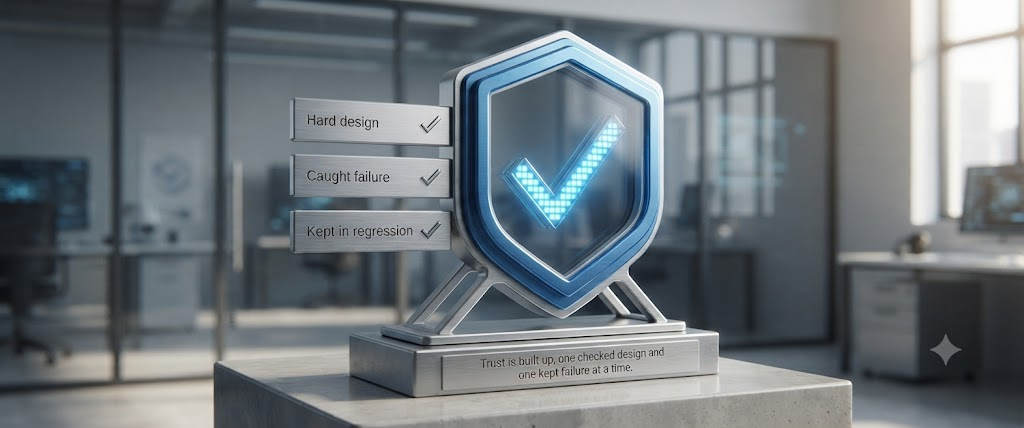
We are not asking anyone to trust these tools because we wrote a good page about them. Trust in an EDA tool is not stated. It is accumulated, one hard design and one caught failure at a time, and we are early in that process, and we say so.
Our Approach
We're building systems that think about specifications the way engineers do.
We build our own in-house EDA with an intelligence layer across it. Our stack covers the full flow,
from spec to comprehensive sign-off, on tools we build and control.
Walk-in ones, walk-in zeros