
Perception for the field, from crop to quality.
WIDAR brings camera and sensor fusion to agriculture: watching crops, plants and drying lines, converting what it sees into decisions at the edge.
Our agriculture work runs today as DRIFT, a real-time dehydration intelligence layer deployed on a working food-processing line: detecting workers, tracking drying surfaces, and scoring product quality frame by frame at the edge.
Quality decisions that never stop.
From the field to the drying line, agriculture runs on continuous judgment. Is the crop ready. Is the surface dry enough for the next layer. Is a batch drifting toward spoilage. Today that judgment rests on sustained human attention across hours and many surfaces. The errors it misses, hidden moisture, uneven drying, early color degradation, surface only weeks later during storage or shipment. Perception that watches patiently and alerts early turns those silent losses into caught ones.
One perception layer, sight fused with context.
WIDAR for agriculture fuses what the camera sees with the conditions around it. Detection finds and tracks products, plants and people. Color science reads degradation the eye misses. Environmental sensors ground it all in the physics of drying. Together they turn a stream of frames into an objective signal: ready, keep drying, or check now.
Detection
Finds and tracks plants, products and workers across angles, distances and lighting, on the same CNN perception core behind WIDAR.
Color and texture
Reads drift the eye misses: color change in HSV and delta-E, gloss and edges, to catch browning, over-drying and uneven moisture.
Environmental fusion
Temperature, humidity and light correlate with visual signals so a moisture estimate holds against the real conditions of the day.
From frames to a decision
Each surface is scored per frame and reduced to a plain signal for the worker: ready for the next layer, keep drying, or check now. Detection runs across varied camera angles, distances, lighting and product arrangements, so the decision holds in real factory conditions, not just a lab bench.
See it in the field.
DRIFT runs on a working food-processing line today. Every panel below is from that deployment and its training. Tags are literal: DETECTION FIELD DATA EDGE
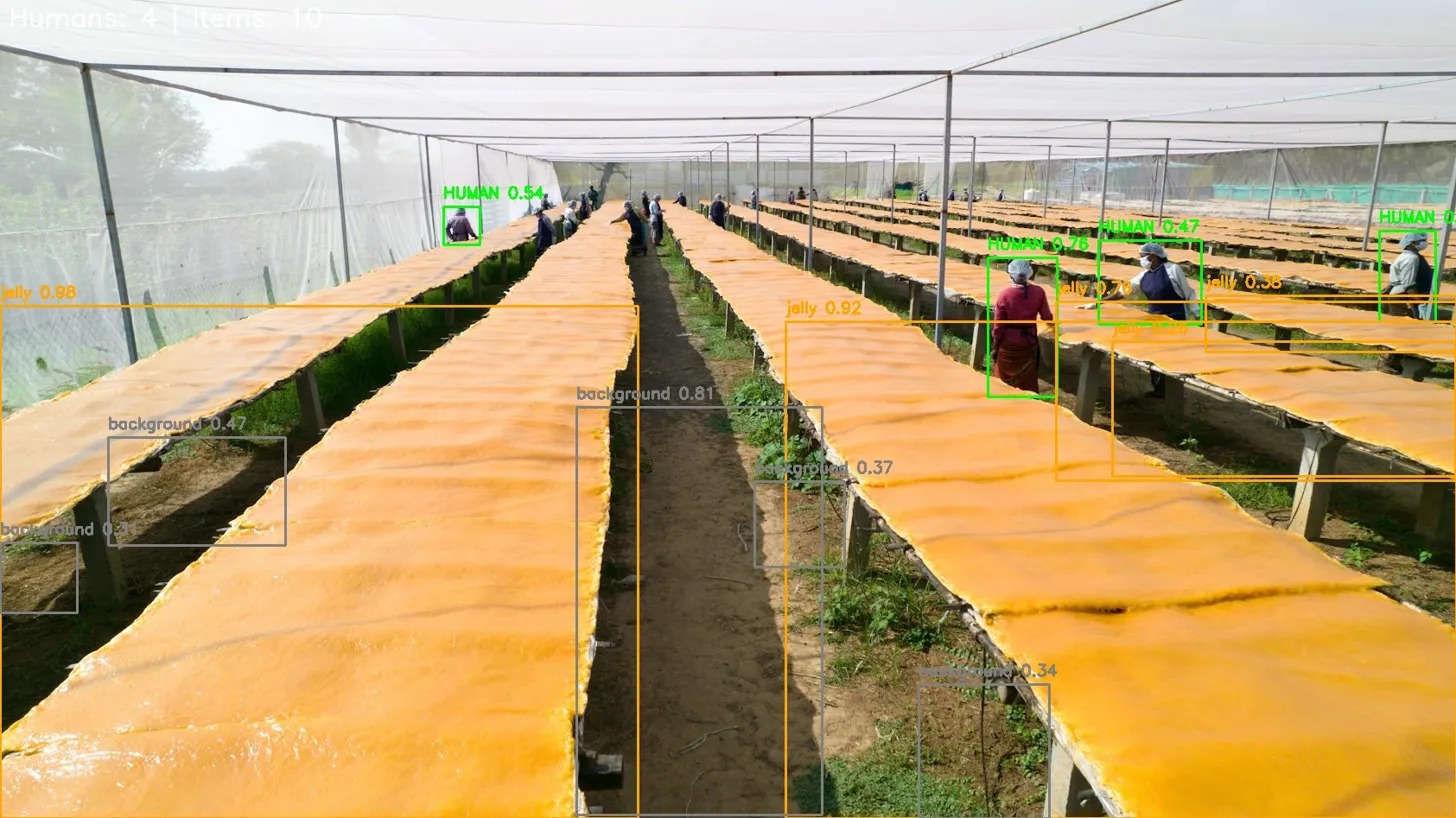
Live line, workers and product tracked
A real production scene: four workers detected for safety monitoring and drying surfaces tracked for quality, each with a confidence score. One perception pass, two jobs at once.
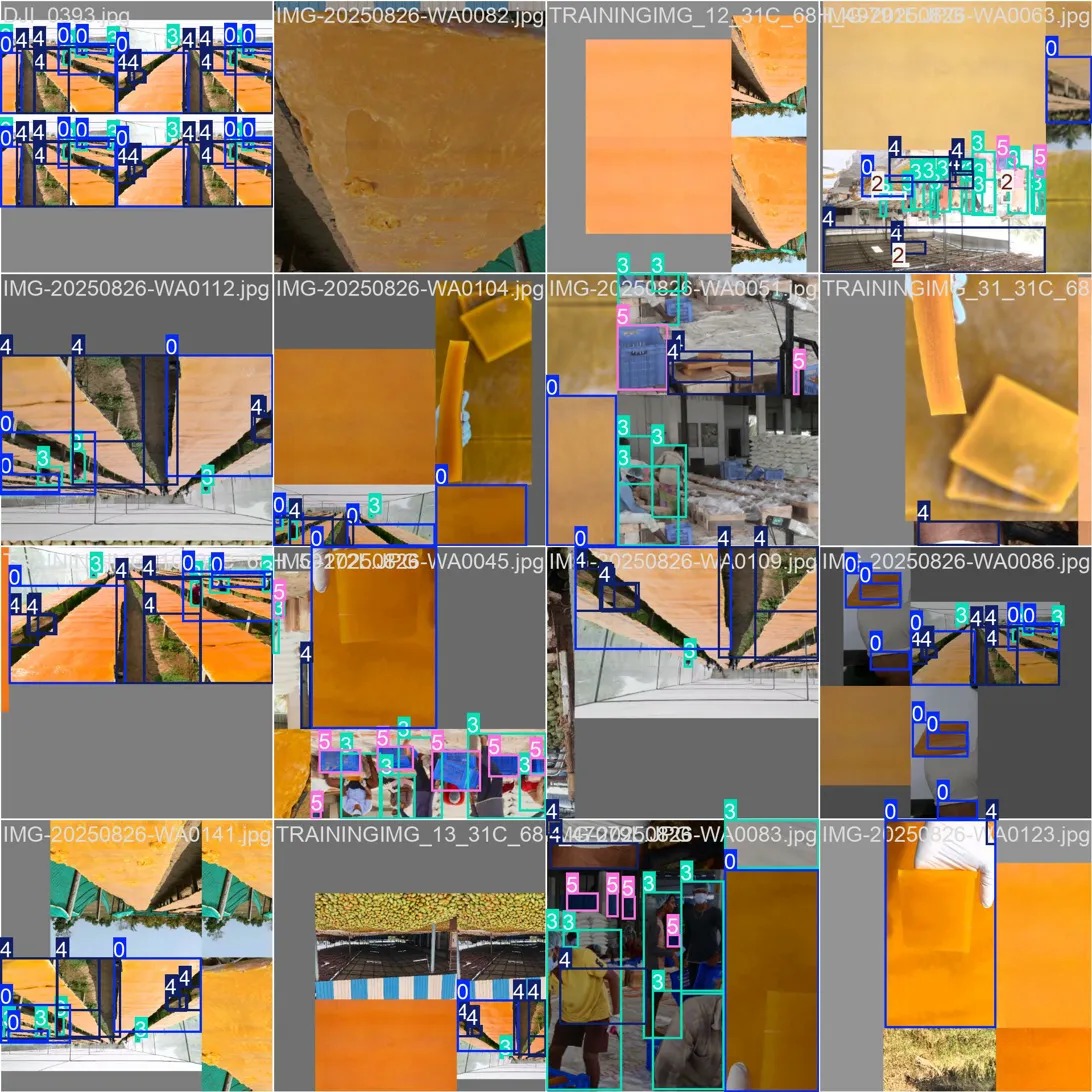
Holds across real conditions
Detection across varied angles, distances and lighting, from bright sun to shade and overcast, over jelly sheets, wood trays, totes and people. Real variation, not a single staged shot.
Trained on real factory images
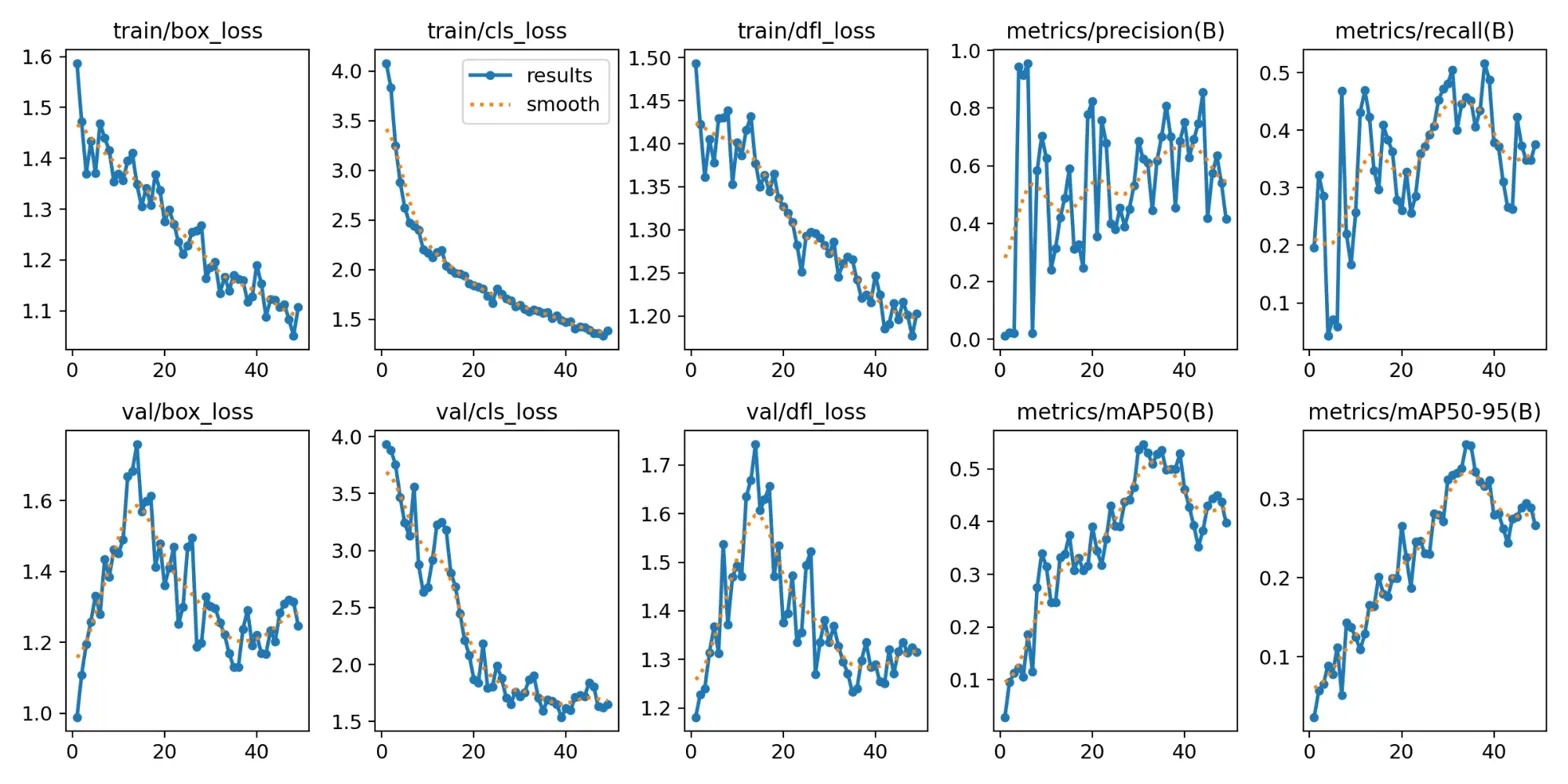
Loss falling and mAP climbing across 50 epochs, with validation tracking training, a model that generalizes to new images. Ground truth comes from experienced workers, capturing their judgment as data.
Per-class accuracy, stated plainly
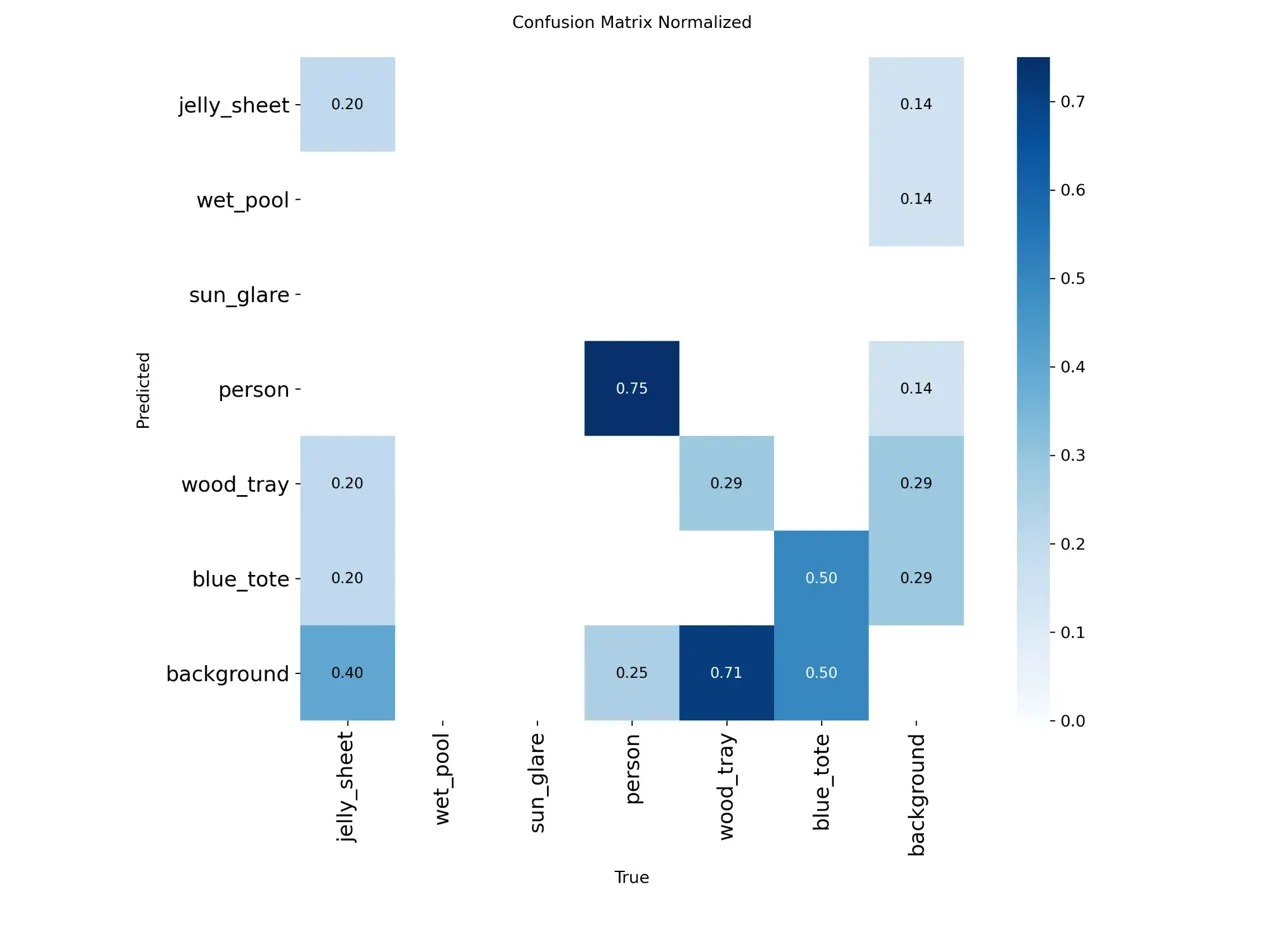
Person detection strong, other classes still gathering training data, all reported per class. We show the model where it stands and keep improving it season over season.
Built for the edge, on a path to our silicon.
A factory line cannot wait on the cloud. DRIFT runs on-device, at the edge, so decisions land in real time without a connection. It shares the perception core behind WIDAR, the same CNN pipeline that runs bit-exact on WIOWIZ-designed RTL, which gives agriculture a direct path from working software to dedicated silicon.
That path is a hardware path we already own, because we designed the accelerators, the DSP and the RISC-V control ourselves.
- On-device inference, no cloud Real-time decisions on the line at 20+ FPS, without a network dependency.
- Shared CNN perception core on our accelerator RTL The same WIOWIZ CNN accelerator behind WIDAR, feature maps verified bit-exact.
- RISC-V control at the edge An RV32IM core with an 8x8 systolic NPU as the deployment target for on-chip inference.
- Traceable records per batch Per-surface status and batch history captured for quality and export documentation.
Where WIDAR for agriculture is going.
DRIFT is a working system on a real line today. From here it broadens across products and deepens toward silicon, without skipping steps.
Live line, edge deployment
Detection of workers and drying surfaces, color and environmental fusion, and a ready, keep drying or check decision per surface, running on a real food-processing line at the edge.
More crops, our own simulation
Calibrate across more products, from fruit pulp and spices to leafy vegetables and fish, and stand up our own scenario simulation to train and validate perception across seasons and conditions.
On-chip inference in the field
The perception pipeline running on WIOWIZ silicon as a reusable intelligence block, low-latency and manufacturable into dedicated hardware for the line.
Request a WIDAR for agriculture briefing.
We walk teams through the perception pipeline, the DRIFT deployment, and a path to your own edge silicon for the line. Not slideware: the system running.